Sheep pregnancy guide
How long is a sheep pregnant?
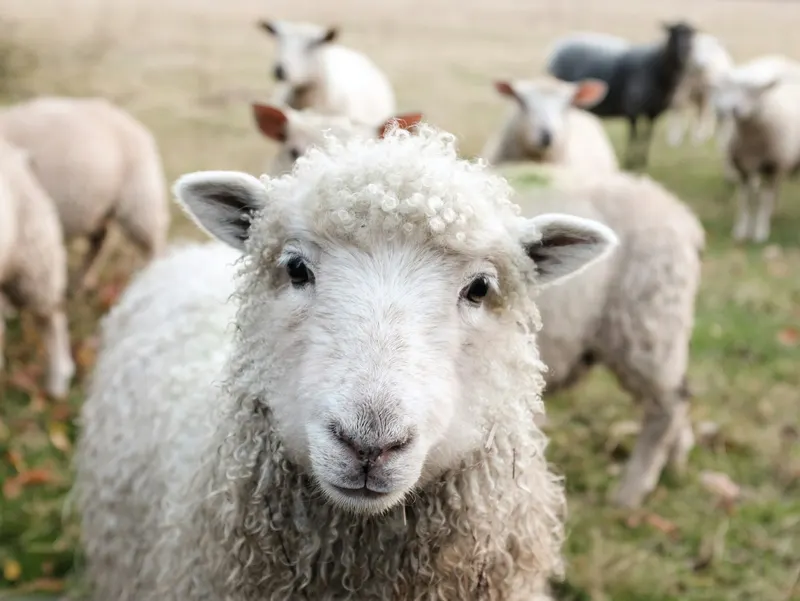
A sheep is pregnant for about 147 days (about 4.8 months). The normal range is 142 to 152 days, so most lambs arrive within that window rather than on the exact average day. Breed shifts the date by a few days, which is why the calculator asks for it.
Quick rule: Count about 5 months forward from the mating date, then adjust for breed.
How to use the sheep pregnancy calculator
1. Enter the mating date. The day the ram mated her. With raddle crayons, use the date you saw her marked. Tap Use today if it was today.
2. Pick the breed. The whole window moves with the breed average.
Optional: expected lambs. Singles tend to arrive a day later, triplets a day earlier.
Then follow the schedule. Each task gets a real date, the next one is highlighted, the status shows whether your ewe is on track, and the month by month cards above show where things stand. Use Copy schedule or Add to Google Calendar to keep it.
Gestation formulas
- Estimated lambing date = mating date + 147 days
- Earliest normal lambing = mating date + 142 days
- Latest normal lambing = mating date + 152 days
- Breed adjustment = breed average minus 147 days, applied to the whole window
- Call your vet if nothing has happened by day 153
Care schedule for a pregnant ewe
| When | Task | Why |
|---|---|---|
| Day 17 | Watch for return to heat | Sheep cycle every 16 to 17 days. No re-marking suggests she is in lamb. |
| Day 60 | Scan for pregnancy | Ultrasound between days 45 to 90 counts lambs best. |
| 42 days before due date | Increase feed | Raise energy for the last six weeks, more for twins and triplets. |
| 28 days before due date | Clostridial booster | CD and T booster about four weeks before lambing protects the lambs. |
| 21 days before due date | Crutch and set up lambing pens | Clip wool around the udder and tail. Prepare pens and a lambing kit. |
Signs of lambing and when to call the vet
Labour is close if she has
- ✓Udder fills and teats become firm
- ✓Vulva swells and relaxes
- ✓Restlessness, pawing, lying down and getting up
- ✓Separating from the flock and searching for a spot
Call your vet immediately if
- !Strong straining for 30 minutes with no lamb born
- !A baby is visible but stuck, or comes backwards with no progress
- !Heavy bleeding or foul-smelling discharge
- !She is weak, collapsed, off her food or in obvious pain
- !No lambing by day 153
Sheep gestation by breed
| Breed or type | Average | Normal window from the start date |
|---|---|---|
| Standard or mixed breed | 147 days | 142 to 152 days |
| Suffolk | 145 days | 140 to 150 days |
| Dorset | 145 days | 140 to 150 days |
| Texel | 147 days | 142 to 152 days |
| Katahdin or Dorper | 147 days | 142 to 152 days |
| Merino | 150 days | 145 to 155 days |
| Finnsheep or Romanov | 143 days | 138 to 148 days |
Frequently asked questions
How long is a sheep pregnant?
A sheep is pregnant for about 147 days (about 4.8 months). Most lambs arrive between day 142 and day 152. Breed matters: Standard or mixed breed about 147 days, Suffolk about 145 days, Dorset about 145 days, Texel about 147 days.
How accurate is this calculator?
It uses the average length and the normal range published in veterinary references, adjusted for the breed you pick. Individual animals vary, so treat the date as the middle of a window, not a promise.
When can I confirm the pregnancy?
Scan for pregnancy around day 60. Ultrasound between days 45 to 90 counts lambs best.
What if she goes past the due date?
Going a few days past the average is normal. The calculator marks day 152 as the end of the usual window and day 153 as the point to call your vet even if she seems well.
What are the signs that lambing is close?
Udder fills and teats become firm. Vulva swells and relaxes. Restlessness, pawing, lying down and getting up.
Is my data saved?
No. Everything is calculated in your browser. Nothing you type is stored or sent anywhere.
Disclaimer: This calculator gives estimates for planning only. It is not veterinary advice and cannot replace an examination by your vet. If you are worried at any stage, especially around birth, contact your vet promptly.